
How to Maintain Outdoor Rubber Tiles – Daily, Seasonal, and Long-Term Care
Outdoor rubber tiles are designed for durability, weather resistance, and safety.
However, without regular maintenance, even high-quality outdoor rubber flooring can become slippery, faded, or loose over time.
With simple daily cleaning, seasonal inspections, and timely repairs, outdoor rubber tiles can last for many years while staying safe and visually clean.
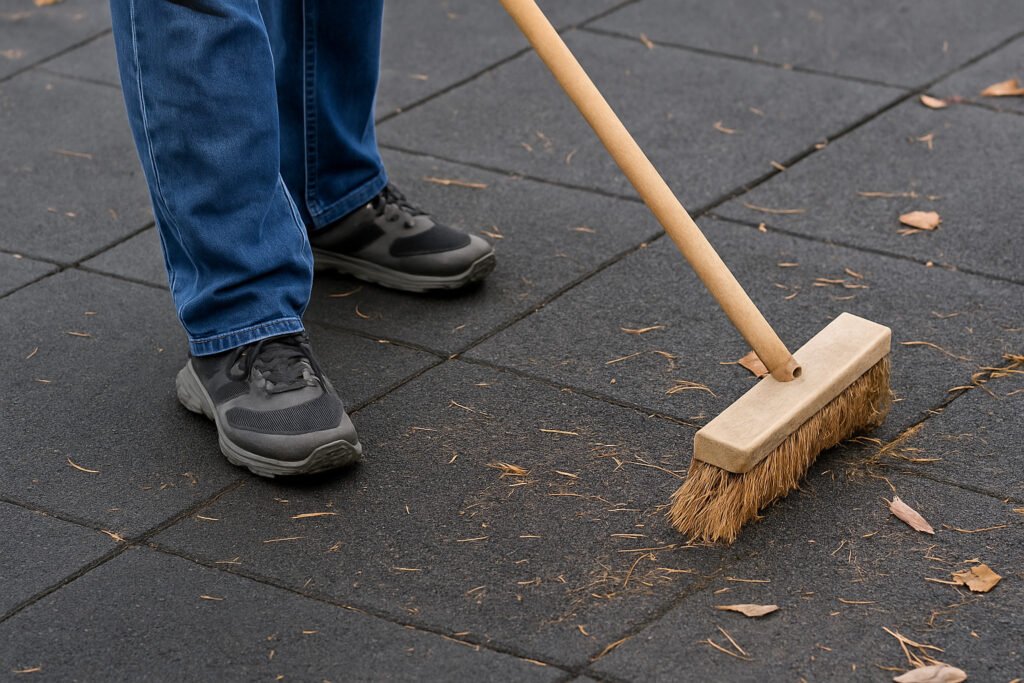
This guide explains how to maintain outdoor rubber tiles in real environments, including playgrounds, walkways, parks, and recreational zones.
Why Does Outdoor Rubber Flooring Require Maintenance?
Unlike indoor flooring, outdoor rubber tiles are constantly exposed to environmental stress:
- UV radiation and heat from sunlight
- Dirt, sand, leaves, and tree sap
- Rainwater, standing moisture, and mold risk
- Freezing and thawing cycles in colder climates
Without routine care:
- Tiles may shift or loosen
- Edges can curl or lift
- EPDM granules may fade or lose surface texture
Proper maintenance is not only about appearance. It directly affects slip resistance, drainage performance, and long-term safety in outdoor areas.
Daily and Weekly Maintenance Tasks
These basic tasks can usually be handled by facility staff or maintenance teams.
- Sweep or blow away dust, leaves, and sand
- Use soft-bristle brooms or leaf blowers
- After rain, check for standing water
- Keep the surface clear to maintain slip resistance
Good drainage starts from the base layer.
If water pooling is a recurring issue, review this outdoor base preparation guide and understand how to prepare the ground for outdoor rubber flooring before adjusting the surface layer.
Monthly and Seasonal Maintenance Inspections
Every month—or at least once per season—inspect the surface carefully.
Check for:
- Loose or lifting tile edges
- Open seams or shifting tiles
- Color fading, surface chalking, or fine cracks
- Drainage blockage near borders or playground equipment
Creating a simple maintenance log helps track changes over time and reduces unexpected repair costs.
For areas that require higher durability and certified performance, many projects choose commercial-grade rubber tiles used in high-impact zones.
How to Clean Outdoor Rubber Tiles Properly
Outdoor rubber tiles should be cleaned gently to avoid surface damage.
| Cleaning Tool | Recommended | Notes |
|---|---|---|
| Broom or blower | ✅ | Daily removal of dry debris |
| Neutral pH cleaner | ✅ | Safe for routine washing |
| High-pressure washer | ❌ | May damage seams or lift tiles |
| Rotary scrubber | ✅ | Use soft pads only |
Tip:
For stubborn dirt, use warm water and a soft brush. Avoid cleaning under strong direct sunlight to prevent rapid drying and residue marks.
For better color stability and weather resistance, it helps to understand EPDM granules used for outdoor rubber flooring and how to choose the right EPDM granules for playground surfaces.
What to Do After Heavy Rain or Extreme Weather
Outdoor rubber tiles are water-resistant, but post-weather checks are still essential.
- Remove mud, wet leaves, or debris as soon as possible
- Check drains and edge gaps for blockage
- Inspect glue seams or interlocking joints
- After freeze-thaw cycles, re-check tile stability
Avoid heavy use during freezing rain or immediately after ice melt to prevent tile movement and seam stress.
How to Repair Damaged or Aging Rubber Tiles
One major advantage of rubber tiles is their modular structure, which makes repairs simple.
| Issue | Recommended Solution |
|---|---|
| Loose tile | Clean the base and re-glue or re-lock |
| Surface cracking | Replace the affected tile |
| Color fading | Monitor condition; repainting is not recommended |
| Severe wear | Replace only the damaged sections |
For projects that require flexible repair and easy replacement, modular puzzle rubber tiles are commonly used in outdoor applications.
Extra Tips to Extend Outdoor Rubber Tile Lifespan
- Use thicker tiles (40–50mm) in high-impact areas
- Install edging or borders to reduce edge lifting
- Perform full inspections every spring and autumn
- Take annual photos to track wear and plan upgrades
Frequently Asked Questions About Outdoor Rubber Tile Maintenance
How often should outdoor rubber tiles be cleaned?
Outdoor rubber tiles should be swept or blown clean regularly, especially in high-traffic areas or during seasons with heavy leaf fall. Routine debris removal helps maintain slip resistance.
Can outdoor rubber tiles be cleaned with pressure washers?
High-pressure washers are not recommended. Strong water pressure may damage seams, dislodge tiles, or weaken adhesive. Gentle cleaning with a neutral pH cleaner is safer.
Do outdoor rubber tiles fade under sunlight?
Some color fading may occur over time due to UV exposure, especially with lower-quality materials. EPDM surfaces generally provide better UV resistance than standard SBR rubber tiles.
What should I do if water pools on the surface?
Standing water usually indicates drainage or base preparation issues. Clearing debris is the first step, followed by checking slope and drainage if pooling continues.
Are outdoor rubber tiles easy to replace if damaged?
Yes. One key advantage of rubber tiles is modular repair. Individual damaged tiles can be replaced without removing the entire flooring area.
Summary
Outdoor rubber tiles are low-maintenance—but not maintenance-free.
With regular cleaning, seasonal inspections, and timely repairs, outdoor rubber flooring remains safe, stable, and visually clean for many years.
Related Reads
- How to install outdoor rubber flooring for playgrounds and pathways
- Playground flooring thickness and safety guide
- EPDM vs. PU flooring for outdoor applications
- How to prepare the ground for outdoor rubber flooring
- How to choose the right EPDM granules for playgrounds
If you need help with replacement tiles or long-term maintenance planning, visit Lanhefloor or contact our team for project-specific guidance.