
Can You Install Rubber Flooring Over Concrete, Wood, Tiles, or Carpet?
Installing rubber flooring without tearing out your existing surface can save both time and renovation costs.
Yes — you can install rubber flooring over concrete, tile, wood, or even carpet. But each type of subfloor requires different preparation and installation techniques to ensure a long-lasting and professional finish.
In this guide, I’ll walk you through the pros, cons, and tips for each subfloor type so you can confidently prepare your space.
Can You Install Rubber Flooring Over Concrete?
Concrete is by far the most compatible subfloor for rubber flooring.
You can install both rubber rolls and rubber tiles directly over level, clean, and dry concrete.
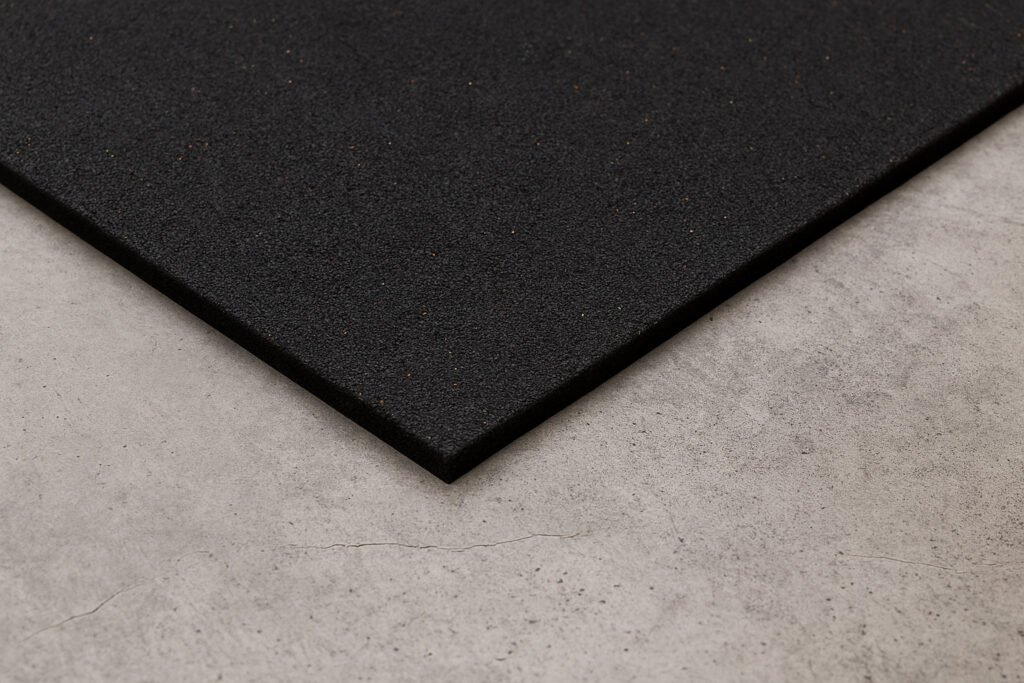
Why concrete works best:
- It’s stable and does not flex under load.
- Provides excellent bonding surface for PU adhesives.
- Requires minimal prep if it’s already smooth and level.
Important steps:
- Clean thoroughly to remove dust and oil.
- Repair cracks or uneven spots with a leveling compound.
- Allow new concrete to cure for at least 28 days.
- Check moisture levels before installation (especially in basements).
Best matched with:
✅ Use two-component PU glue for permanent installs.
Can You Install Rubber Flooring Over Ceramic or Porcelain Tiles?
Yes — but only if the tiles are flat, intact, and the grout lines are not too deep.
Rubber rolls or puzzle tiles can be installed over tile, with proper preparation.
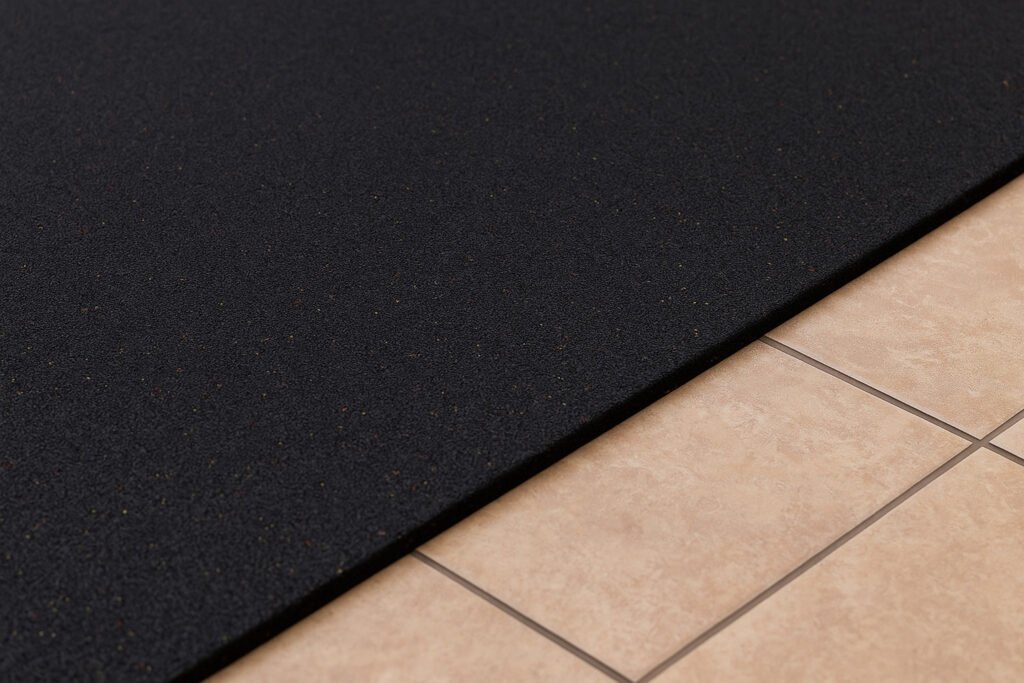
What to check:
- Ensure all tiles are firmly bonded (no hollow sounds).
- Fill grout lines with patching compound if deeper than 3–5mm.
- Clean and degrease surface thoroughly.
Recommended approach:
- For seamless look: use rubber rolls with full glue-down.
- For removable or DIY setups: puzzle tiles work great.
🛠️ Before glue-down, allow rubber rolls to unroll and relax for at least 24–48 hours. This reduces curling and ensures a smooth installation. Learn more in our problem & solution guide.
Can Rubber Flooring Be Installed Over Wood Floors?
Yes — but the wood must be stable, dry, and not prone to shifting or warping.
Rubber tiles or thinner rubber rolls are better suited for wood surfaces.
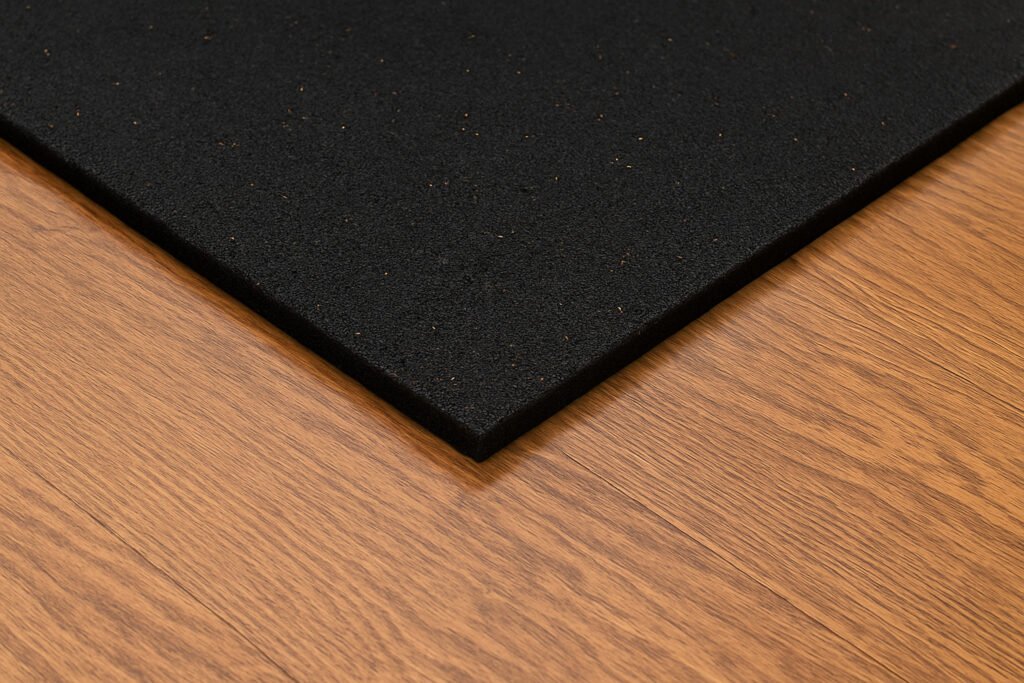
Key conditions:
- The wooden subfloor should be tightly secured and squeak-free.
- Avoid fresh wax or sealers that may affect adhesion.
- Add a protective slip sheet (like kraft paper) to prevent color migration from rubber.
Suitable products:
- Interlocking Tiles – fast, non-permanent, easy to replace.
- Thin Rubber Rolls ≤6mm – light enough to avoid compressing softwood.
- Tiny Granule Rubber Tiles – smooth surface and fine texture for home studios.
📝 Note: In humid areas or older wood flooring, consider a moisture barrier.
Can Rubber Flooring Be Installed Over Carpet?
⚠️ Installing rubber flooring over carpet is generally not recommended, unless the carpet is extremely thin and tightly glued.
High-pile or plush carpet will compress, shift, and make the rubber unstable.

Possible only if:
- The carpet is low pile, glued down, and has a hard underlayment.
- You use a subfloor layer such as plywood or rigid foam panels.
Safer alternative:
- Remove carpet and install rubber flooring on the original subfloor.
- Or, build a modular subfloor platform for stability.
❌ Never install rubber rolls directly on thick carpet. It causes tripping, bouncing, and will damage over time.
Subfloor Compatibility Comparison
| Subfloor Type | Can You Install Rubber Flooring? | Recommended Rubber Type | Preparation Needed | Notes |
|---|---|---|---|---|
| Concrete | ✅ Ideal | Roll or tile | Clean & dry surface | Best long-term base |
| Tile | ✅ With prep | Roll preferred | Fill grout, level | Use glue or subfloor |
| Wood | ✅ If stable | Interlocking or thin roll | Slip sheet, dry | Avoid in damp areas |
| Carpet | ⚠️ Not ideal | Puzzle tile + subfloor | Rigid underlayment | Not for plush types |
Final Tips Before You Install
- Always inspect and prep your subfloor based on its type.
- Let rubber rolls lay flat for 1–2 days before installation.
- Use PU glue for permanent installs.
- Add 5–8% material buffer for trimming or future replacements — here’s how to calculate it.
Explore outdoor rubber floors and EPDM granules if you’re installing in outdoor or high UV areas.
Looking for tailored advice? Visit our homepage or explore real project cases to get inspired.