
Why EPDM Granules Fall Off After Installation? Top Reasons and Practical Solutions
Many playground builders, contractors, and procurement managers ask the same question:
“Why does the EPDM surface start losing granules?”
Granule loss is one of the most common issues in EPDM playgrounds, running tracks, and outdoor sports surfaces. But the real causes are not always obvious. Many people believe the EPDM granules are the problem, while in most cases, the issues come from the binder, mixing ratio, weather, or installation method.
This guide explains the real reasons in simple, clear English, with industry-level depth.
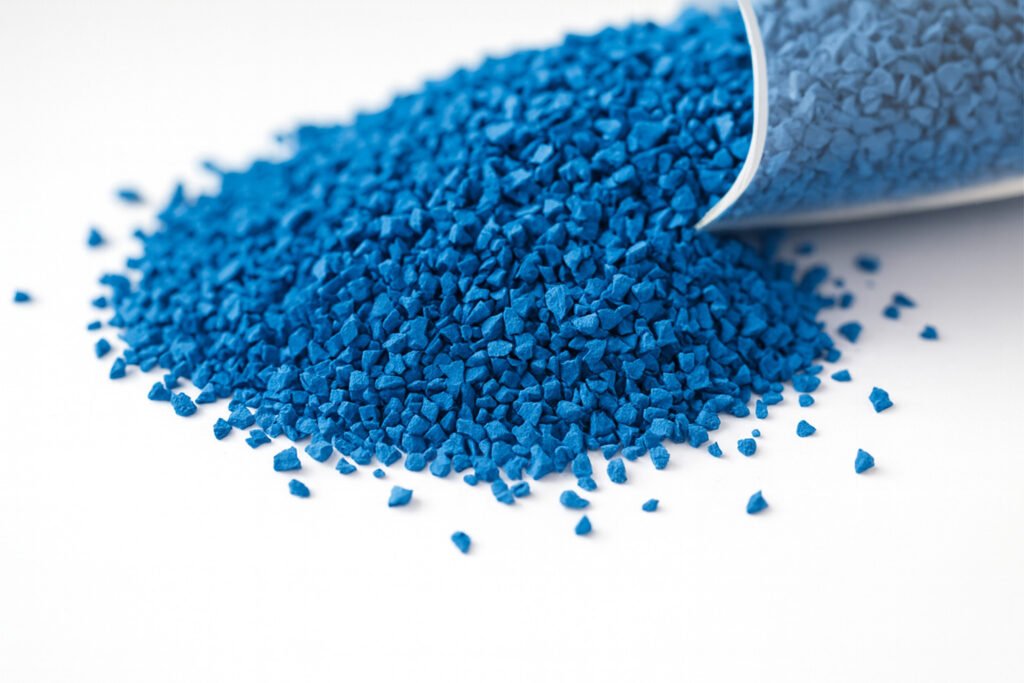
1. Insufficient PU Binder Ratio (Most Common Cause)
EPDM granules must be fully coated by the binder. If the binder is not enough, granules will not bond properly and may fall off after curing.
Standard binder ratios:
| EPDM Granule Size | Binder Ratio |
|---|---|
| 1–3 mm | 18%–22% |
| 2–4 mm | 20%–25% |
| SBR Base Layer | 8%–12% |
Using too little binder to reduce cost is the No.1 reason for:
- Loose granules
- Soft surface
- Early cracking and powdering
2. Wrong Type of PU Binder (1K vs 2K)
Binder selection greatly affects performance.
1K binder issues:
- Moisture-cured
- Slow curing
- Weather-sensitive
- Weak bonding
- Not suitable for large playgrounds
2K binder advantages:
- Chemical curing
- Strong bonding strength
- Stable curing in all climates
- Long-lasting durability
👉 For any commercial EPDM surface, always use a 2K PU binder.
To understand the difference between 1K and 2K binders, you may find this related blog helpful:
https://lanhefloor.com/rubber-applications/can-epdm-wet-pour-flooring-be-used-in-a-home-garage/
3. Poor Mixing of EPDM and Binder
Even if the binder ratio is correct, poor mixing leads to weak bonding.
Correct mixing process:
- Pre-mix A + B binder for 30–60 seconds
- Add binder to EPDM
- Mix for 2–3 minutes
- Ensure every granule has an even coating
If mixing is uneven, some areas will not cure properly.
4. Moist or Dusty EPDM Granules
Wet granules prevent binder adhesion.
Common causes:
- Storage in humid areas
- Rain exposure
- Poor packaging
- Dust or soil contamination
This results in:
- Weak bonding
- Granules peeling off
- Uneven surface texture
5. Sub-Base Problems (Not EPDM’s Fault)
Sometimes the EPDM layer is intact, but the entire flooring detaches from the concrete base.
Causes:
- Concrete moisture > 5%
- Dust or oil on the surface
- No primer applied
- Weak or cracked concrete
This leads to full-layer peeling instead of surface granule loss.
6. Weather Conditions During Installation
EPDM binder performance is sensitive to weather.
High temperature
- Binder cures too fast
- Granules cannot bond fully
- Trowel marks form
Low temperature
- Curing becomes very slow
- Bottom layer may remain soft
High humidity
- Whitening
- Bubbles
- Weak bonding
Rain
- Complete installation failure
Best installation weather:
15–30°C / humidity < 70%.
7. Uneven EPDM Layer Thickness
If the EPDM layer is applied with inconsistent thickness:
- Thin spots → not enough binder
- Thick spots → slow curing
- Soft spots → granules fall off over time
Uniform thickness is essential.
8. Low-Quality EPDM Granules
Not all EPDM is equal.
Low-quality granules:
- Contain recycled rubber
- Have poor UV resistance
- Contain excess dust
- Break down faster
Lanhefloor EPDM is engineered to avoid these issues:
- 100% virgin EPDM
- High UV stability
- Low-dust formulation
- Strong color consistency
- Excellent flexibility for bonding
Learn more:
https://www.lanhefloor.com/epdm-granules/
When Does Granule Loss Occur?
1. Same-day failure
- Incorrect binder
- Insufficient binder
- Wet granules
- Sub-base contamination
2. After several months
- Wrong binder ratio
- Humidity-related curing issues
- Poor-quality EPDM
3. After 1–2 years
- UV aging
- Low-quality granules
- Binder degradation
How to Prevent EPDM Granule Loss (Complete Solution)
Below are practical solutions used in real projects.
Solution 1: Always Use 2K Binder for Serious Projects
2K binder ensures:
- Strong bonding
- Long-term stability
- Safe performance
- Lower maintenance cost
For a deeper understanding of EPDM applications and supplier reliability, read:
👉 https://lanhefloor.com/rubber-applications/how-to-choose-reliable-epdm-granules-suppliers-in-china/
Solution 2: Follow Correct Mixing Ratios
| EPDM Size | Binder Ratio |
|---|---|
| 1–3 mm | 18–22% |
| 2–4 mm | 20–25% |
| SBR Base | 8–12% |
Never reduce binder to save cost.
Solution 3: Use Proper Mixing Technique
Steps:
- Mix A+B binder
- Add binder to EPDM
- Mix 2–3 minutes
- Confirm even shine
Solution 4: Ensure EPDM Is Completely Dry
Moist granules = bonding failure.
Solution 5: Prepare the Sub-Base Correctly
Concrete must be:
- Clean
- Dry
- Dust-free
- Primed
Solution 6: Choose High-Quality EPDM Granules
Lanhefloor EPDM is engineered for:
- Strong bonding
- Higher elasticity
- Lower dust
- Better color stability
Learn more at:
https://www.lanhefloor.com/epdm-granules/
Related Blogs
Here are useful EPDM knowledge resources:
Can EPDM Wet Pour Flooring Be Used in a Home Garage?
https://lanhefloor.com/rubber-applications/can-epdm-wet-pour-flooring-be-used-in-a-home-garage/How to Choose Reliable EPDM Granules Suppliers in China
https://lanhefloor.com/rubber-applications/how-to-choose-reliable-epdm-granules-suppliers-in-china/EPDM Applications and Supplier Guide
https://lanhefloor.com/rubber-applications/how-to-choose-reliable-epdm-granules-suppliers-in-china/
- ASTM Impact Attenuation Standard – https://www.astm.org
- EN1177 Playground Surfacing Standard – https://www.en-standard.eu
- IPEMA Playground Certification – https://ipema.org
Conclusion
EPDM granule loss is usually caused by binder issues, mixing problems, weather, or sub-base conditions—not the EPDM granules themselves.
With proper binder selection, correct ratios, and the right installation method, EPDM flooring can perform safely and last for many years.
If you need advice on EPDM materials, binder ratios, or technical support for your project, feel free to reach out.