
EPDM vs. PU for Outdoor Flooring: Which is Better?
Are you struggling to decide between EPDM and PU for your outdoor flooring project?
EPDM rubber flooring is generally more durable, UV-resistant, and cost-effective for outdoor use than PU, especially in public and playground environments.
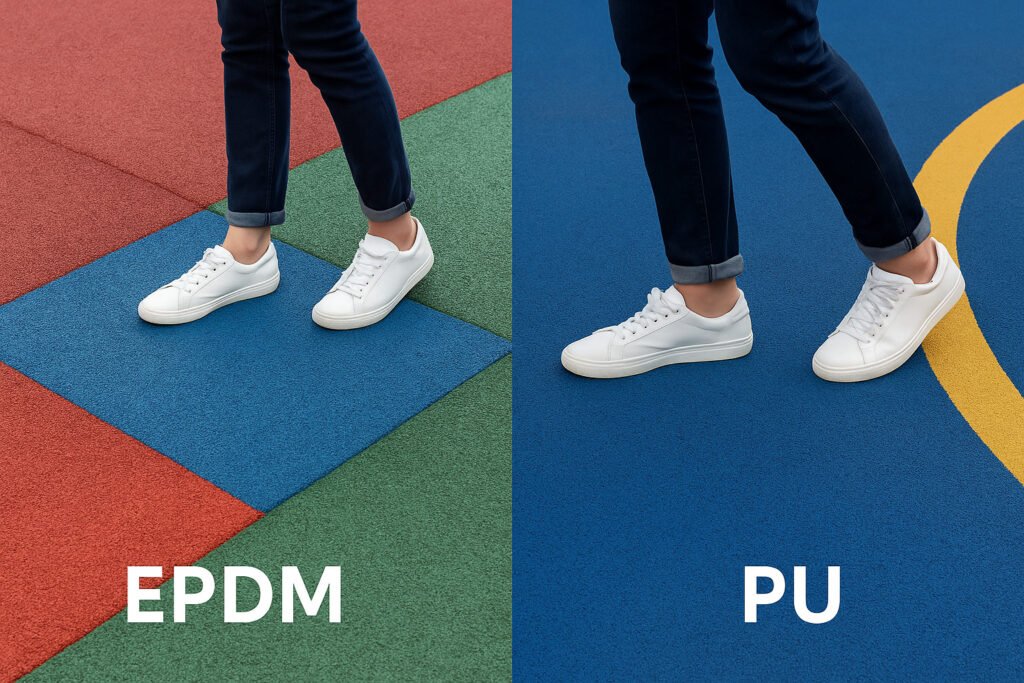
If you’re selecting materials for an outdoor playground, sports court, or recreation space, this comparison will help you choose the right flooring based on real-world performance, safety standards, and long-term cost — not just initial appearance.
What is EPDM and why is it good for outdoor use?
EPDM offers excellent weather resistance, vibrant colors, and long-term safety performance.
EPDM granules provide strong UV resistance, reliable shock absorption, and long-lasting color stability, making them ideal for outdoor environments.
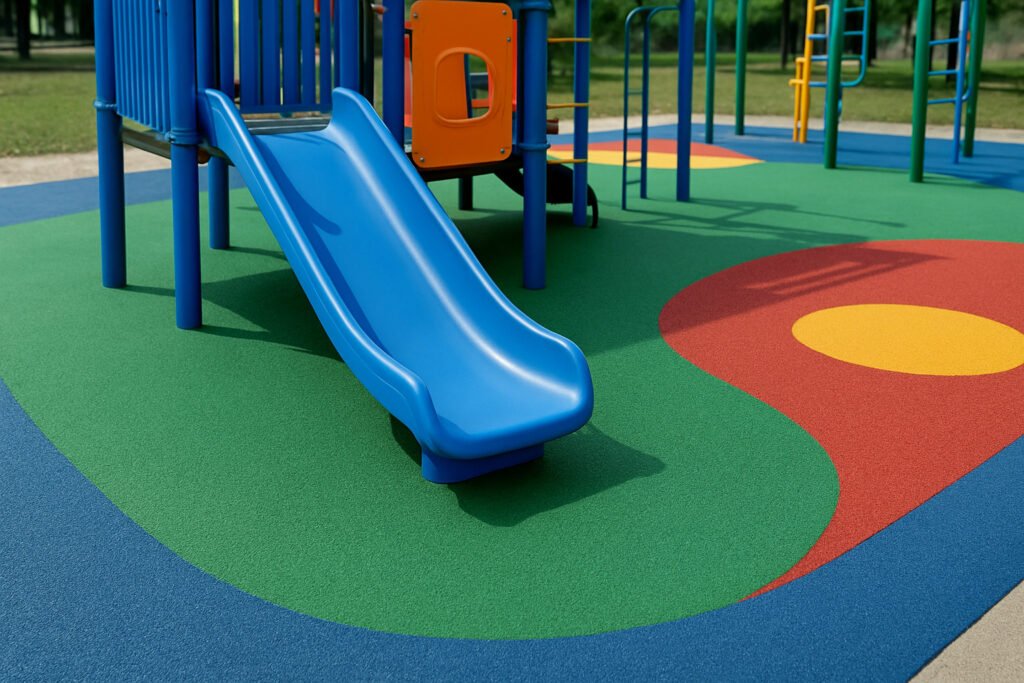
Why EPDM works so well outside
EPDM (Ethylene Propylene Diene Monomer) rubber is designed to withstand long-term exposure to sunlight, rain, and temperature changes. At Lanhefloor, we use high-quality EPDM granules in poured-in-place systems for schools, playgrounds, parks, and community sports areas.
Because EPDM flooring is installed on site, it allows flexible thickness control, seamless surfaces, and creative designs such as logos or color zones. This is one reason EPDM is widely used not only in public playgrounds, but also in residential and light commercial settings, such as garages and private fitness areas.
👉 Related reading: Can EPDM Wet Pour Flooring Be Used in a Home Garage?
Key Strengths of EPDM Flooring
| Feature | EPDM Granules (Lanhefloor) |
|---|---|
| UV Resistance | Excellent – minimal fading under sunlight |
| Shock Absorption | High – recommended 10–15mm thickness |
| Color Variety | Customizable – red, green, blue, yellow |
| Safety Certification | EN1177 & CE certified |
| Maintenance | Easy cleaning, long service life |
| Install Method | Poured-in-place with PU binder (≈22%) |
To ensure long-term performance, EPDM quality starts with raw material selection. Choosing a reliable granule supplier directly affects color stability, elasticity, and bonding strength.
👉 Learn more: How to Choose Reliable EPDM Granules Suppliers in China
What is PU flooring and how does it compare?
PU flooring creates a seamless surface and performs well in controlled environments, but has limitations outdoors.
While PU coatings offer good elasticity and smooth finishes, their UV resistance is lower, and they tend to degrade faster under direct sunlight compared to EPDM.
To be clear, PU systems are widely used and perform well in indoor sports halls and professional facilities.
This comparison focuses specifically on outdoor applications.
Where PU shines and where it falls short
PU (Polyurethane) flooring is commonly applied as a roller or spray coating. Indoors, it offers a clean look and consistent feel. Outdoors, however, repeated UV exposure, rain, and temperature cycles can cause fading, surface chalking, or cracking over time.
The performance of PU-based systems also depends heavily on binder selection. Differences between one-component and two-component PU binders can significantly affect outdoor durability.
👉 Technical comparison: One-Component vs Two-Component PU Binders for EPDM Flooring
PU vs EPDM Performance Outdoors
| Feature | PU Flooring | EPDM Flooring |
|---|---|---|
| UV Resistance | Moderate – prone to fading | Excellent – stable over time |
| Weather Resistance | Can crack under thermal cycling | Flexible, handles hot/cold changes |
| Shock Absorption | Moderate (base dependent) | High with proper thickness |
| Maintenance | Recoating often required | Low maintenance |
| Installation | Roller or spray coat | Poured-in-place granules + binder |
| Color Retention | Average | Bright and long-lasting |
I’ve seen outdoor PU courts that looked perfect at handover but began fading and cracking after two summers of direct sun exposure. That’s why, for outdoor environments, EPDM is usually the safer long-term choice.
Which is safer for children and public spaces?
In safety-critical areas, EPDM has a clear advantage.
EPDM playground surfaces are EN1177-certified for fall protection, while PU systems often require additional layers to meet the same safety standards.
Focus on child safety and public use
EPDM wet-pour systems are widely used in:
- Kindergartens and schools
- Community parks
- Outdoor running tracks
- Public fitness zones
By combining a resilient base layer with a colored EPDM wear layer, these systems deliver both impact absorption and slip resistance. Seamless installation also reduces trip hazards.
Proper installation is just as important as material choice. Common problems such as granules falling off, surface whitening, or bubbling are almost always related to binder ratios, groundwork, or curing conditions.
👉 Troubleshooting guides:
- Why EPDM Granules Fall Off After Installation
- Why Does My EPDM Playground Floor Turn White, Crack, or Bubble?
Safety Compliance Overview
| Safety Factor | PU Floor | EPDM Granule Floor |
|---|---|---|
| Playground certification | Not standard | EN1177 certified |
| Slip resistance | Good when dry | Excellent, even when wet |
| Impact protection | Medium | High with cushion layer |
| Design flexibility | Limited | Full patterns and graphics |
Which one lasts longer and saves more?
For outdoor exposure, EPDM offers a longer lifespan and lower total cost of ownership.
PU systems may appear cheaper initially, but higher maintenance and shorter service life often make them more expensive over time.
Cost and durability breakdown
| Metric | PU Flooring | EPDM Granule Flooring |
|---|---|---|
| Initial cost | Lower | Slightly higher |
| Outdoor lifespan | 3–5 years | 8–10+ years |
| Maintenance frequency | High (recoating needed) | Low |
| Long-term cost | Higher | Lower over full lifecycle |
Correct thickness and groundwork preparation are key to achieving these lifespans.
👉 Installation guidance:
Conclusion
For outdoor flooring applications, EPDM consistently delivers better UV stability, safety performance, and long-term value than PU.
If you’re choosing between EPDM and PU, the right decision depends on climate, usage intensity, safety requirements, and installation quality.
If you’d like, you can share your project details with us — we’re happy to review your application and suggest the most suitable outdoor flooring system before you make a final decision.
✅ Related Pages:
Main Website
Outdoor Rubber Flooring
EPDM Granules
FAQs about EPDM and PU Outdoor Flooring
Is EPDM rubber better than PU for playgrounds?
Yes. EPDM offers stronger UV resistance, better color retention, and certified impact absorption, making it more suitable for outdoor playgrounds.
How long does EPDM outdoor flooring last?
High-quality EPDM systems can last 8–10 years or longer outdoors with proper installation and minimal maintenance.
Is PU flooring suitable for outdoor use?
PU can be used outdoors, but it typically degrades faster under UV exposure and temperature changes, making it more suitable for indoor sports floors.
What certifications does EPDM flooring meet?
EPDM systems from Lanhefloor meet EN1177 and ASTM F1292 standards for playground impact protection.
Can EPDM flooring be customized?
Yes. EPDM granules allow full customization of colors, patterns, logos, and educational designs.