
What Groundwork Does EPDM Wetpour Need?
Wetpour flooring often fails because the groundwork is not prepared correctly. Many people think problems like sinking, cracks, or bubbles come from the EPDM layer, but most issues come from the base below it.
Wetpour does not always need new groundwork. It depends on the condition of the existing surface, drainage, and stability of the area. If the asphalt or concrete is in good shape, we can install wetpour directly. If the ground is soft or uneven, we must build a strong stone base first.
When customers ask me what groundwork they need for wetpour, I always explain the real answer: the ground must be flat, stable, and drain water well. Good groundwork allows the EPDM surface to stay safe and last many years.
Do You Always Need Groundwork for Wetpour?
Wetpour does not always need new groundwork. Many clients think they must dig the whole area and rebuild from zero, but that is not true.
If the surface is already strong and flat—like good asphalt or strong concrete with no cracks—you can install wetpour directly on top. This saves time and money. Many playgrounds, community areas, and school yards install wetpour this way.
But if the ground is grass, mud, old tiles, or broken concrete, then groundwork is required. Without preparation, wetpour will fail quickly. The EPDM layer is flexible, but the base below must not move.
For clients who want to check other wetpour-related topics, I also suggest reading:
- Why does my EPDM playground floor turn white, crack or bubble?
- Why do EPDM granules fall off after installation?
These articles help customers understand why the base is so important.
When Is Groundwork Required?
Groundwork is required when the existing surface is unstable. There are several common situations where we must rebuild the base before installing wetpour.
Typical cases that require groundwork:
Grass, soil, or soft ground
Wetpour cannot be installed on soil because it moves and becomes muddy after rain.Uneven or bumpy areas
High and low points will show through the surface. Wetpour will look wavy.Old concrete with cracks or loose areas
Cracks reflect through EPDM and cause long-term damage.Poor drainage or water pooling
Water under the EPDM layer causes bubbles and separation.Ground movement due to roots or soft soil
This leads to sinking or raised sections over time.
These conditions make wetpour unsafe and reduce its lifespan. If we handle groundwork correctly now, maintenance costs later become much lower.
For more installation questions, I also recommend reading:
- One-component vs Two-component PU binders for EPDM flooring
- How thick should EPDM wet pour flooring be for playgrounds?
Recommended Groundwork Structure
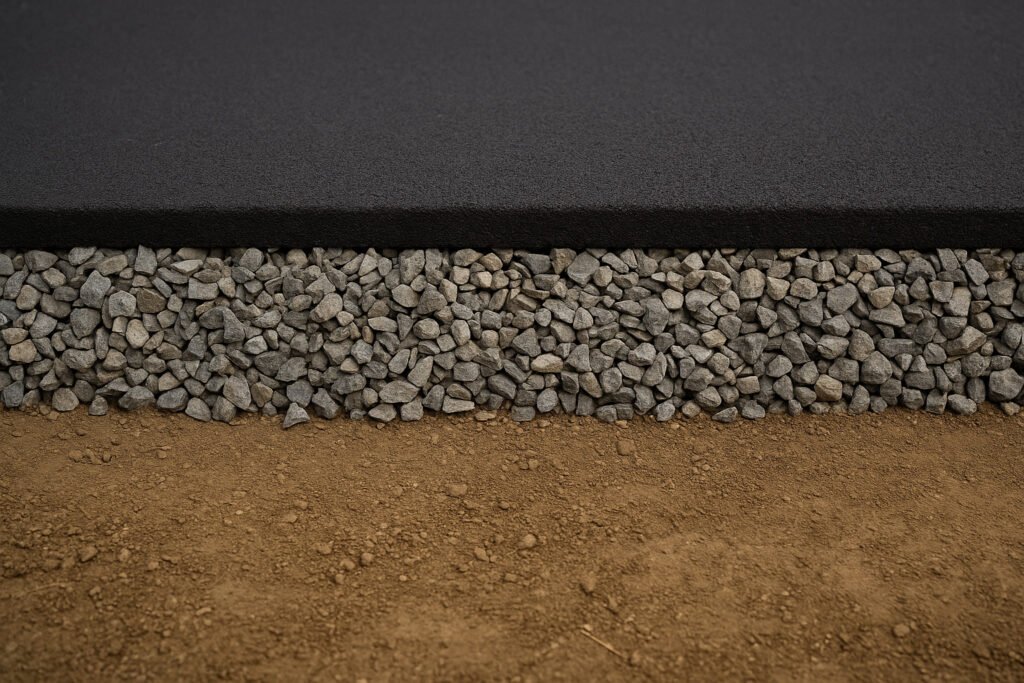
A proper groundwork structure keeps wetpour safe and stable. Here is the standard setup we use in real projects.
1. MOT Type 1 Sub-base (Minimum 100mm)
This is a compacted crushed stone base. It is strong and stops the ground from sinking. It also helps water flow through the base.
2. Existing Asphalt or Concrete
If the asphalt is strong and smooth, we can install wetpour directly. Asphalt is ideal because it drains better and does not crack easily.
Concrete is acceptable too, but cracks must be repaired and the slope must allow water to flow away.
3. Edging System
Edging is important. It keeps the wetpour material inside the area so it does not spread during installation. We use aluminum, concrete, or rubber edge sections.
4. Drainage
If the area often collects water, we must add drains or design slopes. Wetpour is porous, but water must still escape under the surface. Good drainage can prevent bubbles and cracking.
For more information on EPDM material quality, customers can read:
How Groundwork Affects Wetpour Lifespan
Groundwork is the biggest factor in how long wetpour lasts. A good EPDM surface can last more than 10 years, but this only happens if the base is stable.
Groundwork affects wetpour in several ways:
- Stability: If the ground is soft, the wetpour will sink.
- Crack Prevention: If cracks exist in concrete, they will show through the EPDM.
- Water Control: Poor drainage causes bubbles and freezing damage.
- Safety: A stable ground helps keep the correct impact protection for playgrounds.
In my experience working with international clients—including Australia, Spain, Canada, and Singapore—the most expensive repairs often come from poor groundwork. Fixing the base later always costs more than doing it correctly at the beginning.
For more technical guidance, clients can also check the UK HSE safety guidelines:
https://www.hse.gov.uk/
Common Problems Caused by Poor Groundwork
When groundwork is not correct, wetpour will fail. This section helps clients understand what to avoid.
Common problems include:
Sinking or dips
Caused by soft soil or poor compaction.Cracks reflecting through the EPDM
Happens when old concrete is not repaired.Bubbles or raised areas
Usually caused by trapped moisture.Loose granules or shedding
Often linked to poor drainage or bad surface bonding.Water pooling
This leads to long-term damage and algae growth.
For clients needing deeper troubleshooting, I recommend:
- Why does my EPDM playground floor turn white, crack or bubble?
- Why do EPDM granules fall off after installation?
Wetpour Thickness vs Groundwork
Many people confuse “groundwork” with “rubber thickness.” They think thick rubber can fix a weak base. This is wrong.
Groundwork = the structure below the rubber
Thickness = safety and performance above the base
In real installation:
- 13mm total = 8mm SBR + 5mm EPDM
- 10mm total = 5mm SBR + 5mm EPDM
- Some light-use areas use 6–8mm EPDM only (no SBR)
These thickness options are about fall protection and performance, not groundwork. Even thick EPDM cannot fix poor drainage or unstable soil.
The RoSPA playground authority also supports this view:
https://www.rospa.com/play-safety
Summary: What Groundwork Does Wetpour Need?
Wetpour needs simple but correct groundwork:
- Existing good asphalt or concrete can be used directly.
- Soft ground needs at least 100mm MOT Type 1 crushed stone.
- Good drainage is necessary to avoid bubbles and sinking.
- A strong base helps wetpour last more than 10 years.
If you follow these points, wetpour installation will stay safe, clean, and durable for years.
Conclusion
Wetpour performance depends on the base below it. When the groundwork is stable and drains well, the EPDM surface stays strong, safe, and long-lasting. I always remind clients: spending a little extra on groundwork now will save you many future repair costs.