
Can EPDM Wet Pour Flooring Be Used in a Home Garage? Full Guide
Many homeowners want a clean, safe, and durable garage floor. But cracks, dust, oil stains, and noise often make the space hard to use.
Yes, EPDM wet pour flooring can be used in a home garage, but only in limited cases. It works well for walkways and multi-use garage spaces, but it is not ideal for areas where cars will stay long-term.
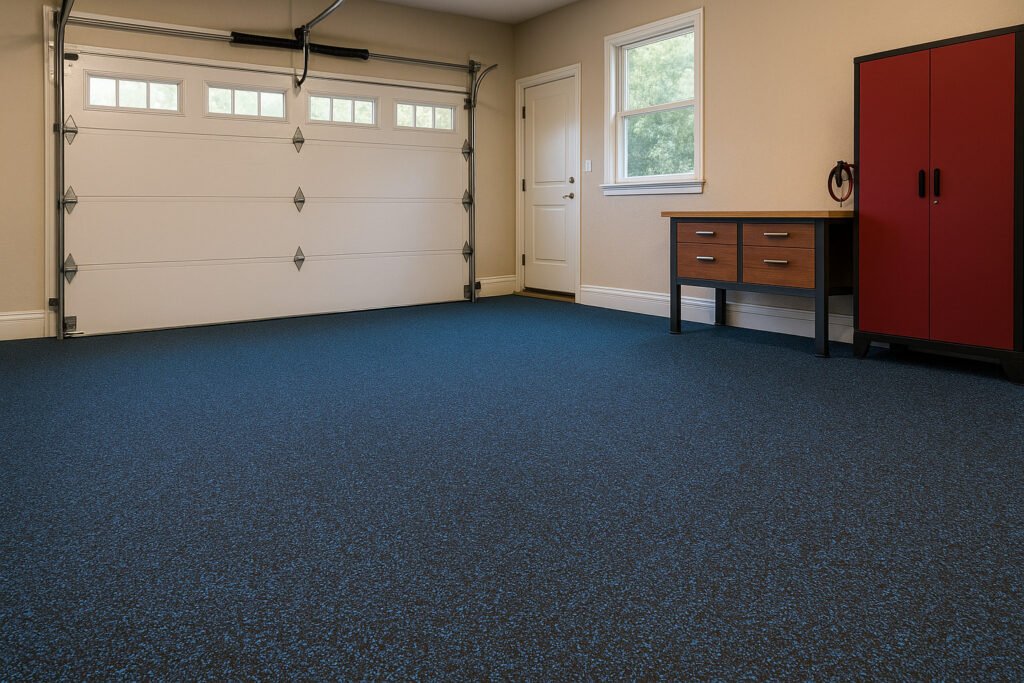
I want to help you understand where EPDM wet pour works well and where it does not. Many buyers ask me this question, so I wrote this guide to make everything clear.
What Is EPDM Wet Pour Flooring?
Many people see EPDM wet pour in playgrounds and think it will also fit indoor or semi-indoor spaces like home garages.
EPDM wet pour flooring is a poured-in-place rubber surface made from EPDM granules and binder. It is flexible, safe, and designed for outdoor use like playgrounds, parks, and schools.
What materials are used in EPDM wet pour?
EPDM wet pour flooring uses colored EPDM granules mixed with PU binder. These granules offer long-lasting color, UV protection, and soft elasticity. The binder holds the granules together, forming a cushioned and seamless surface.
How is EPDM wet pour installed?
The installer usually builds two layers:
- Base layer (SBR granules) – absorbs impact
- Top layer (EPDM granules 1–3mm or 2–4mm)
Common thickness is 10–15mm for playgrounds. This provides shock absorption for children but is not designed for heavy vehicles.
Key performance features
EPDM wet pour is popular outdoors because it offers:
- UV resistance
- Non-slip texture
- Soft cushioning
- Bright colors
- Long lifespan under weather exposure
Comparison table
| Feature | EPDM Wet Pour | SBR Rubber Tile | Concrete |
|---|---|---|---|
| Cushioning | High | Medium–High | Low |
| UV Resistance | Very Good | Medium | Low |
| Load Capacity | Low–Medium | High | Very High |
| Oil Resistance | Low | Medium | High |
| Best Use | Playground, walkways | Gym, garage | Garage |
Can EPDM Wet Pour Handle Car Weight in a Garage?
Many clients ask me this. My answer is simple:
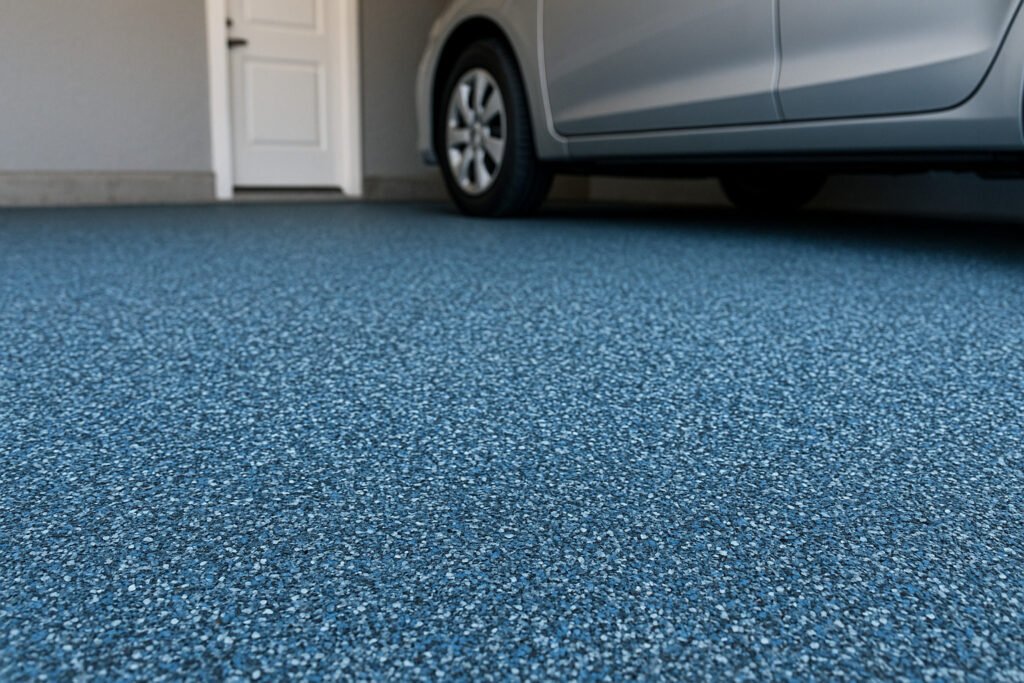
EPDM wet pour can handle occasional car movement, but it is not designed for long-term vehicle parking.
Load-bearing performance
A normal car weighs 1–2 tons. Playground-grade EPDM is usually 10–15mm, which is too soft. Long-term parking can cause:
- Compression marks
- Surface denting
- Uneven wear
If you insist on using EPDM for a garage, the thickness should be 25–30mm, and the base must be concrete.
Oil and chemical resistance
Garage floors often face:
- Motor oil
- Brake fluid
- Fuel
- Cleaning chemicals
EPDM absorbs oil stains easily. This affects durability and color.
Hot tire pickup
When a car tire is hot, the rubber becomes sticky. Soft EPDM can bond to the tire and peel off. This is a common risk in garages.
External factors effect
| Factor | Impact on EPDM |
|---|---|
| Car weight | Possible compression |
| Oil | Stains and softening |
| Heat | Higher risk of peeling |
| Turning tires | Surface tearing |
| Parking in same spot | Permanent dents |
What Are the Pros and Cons of Using EPDM Wet Pour in a Garage?
Advantages
- Very slip-resistant
- Soft underfoot
- Good for children playing in the garage
- Quiet and reduces impact noise
- Comfortable for walking or home gym use
- Bright colors for multi-use garage spaces
Disadvantages
- Not designed for heavy vehicle load
- Not resistant to oil or car chemicals
- Can compress under tires
- High installation cost
- Not removable
- Hard to repair small damaged spots
When EPDM is a good option
- Garage walkway
- Home workshop with no vehicles
- Family play zone
- Garage gym combined with rubber tiles
- Entrance anti-slip strip
What Are Better Alternatives for Garage Flooring?
If you want a durable floor that can handle cars every day, I always recommend our stronger products.
Rubber tiles (best for garages)
- High strength
- 20–50mm thickness
- Shock-absorbing and durable
- Anti-slip and easy to replace
- Good for both cars and gym use
More details:
https://lanhefloor.com/gym-rubber-tile/
- EPDM laminated surface
- Better wear-resistance
- Good for hybrid garage + gym areas
More details:
https://lanhefloor.com/composite-gym-rubber-tile/
Fine granule tile (heavy-duty)
- Dense structure
- Very durable for long-term use
- Ideal for garage car paths
More details:
https://lanhefloor.com/tiny-granule-rubber-tile/
Rubber roll (for non-car zones)
- Good for garage gym
- Flexible and cost-effective
More details:
https://lanhefloor.com/gym-rubber-roll/
Comparison table
| Material | Best Use | Car Load | Oil Resistance | Installation |
|---|---|---|---|---|
| EPDM Wet Pour | Walkways, kids area | Low | Low | Professional |
| Rubber Tile | Garage + gym | Very High | Medium | Easy |
| Composite Tile | Premium garage | Very High | Medium | Easy |
| Rubber Roll | Non-car area | Medium | Medium | Easy |
| Concrete | Vehicles | Very High | High | Hard |
| Epoxy | Garage | High | High | Medium |
When Should You Not Use EPDM Wet Pour in a Garage?
- If the garage is used for daily car parking
- If the garage floor has oil exposure
- If temperatures change widely (winter freezing / hot summers)
- If you need a surface that lasts 10+ years without dents
- If you want a removable or replaceable surface
These conditions make rubber tiles a much better choice.
When EPDM Wet Pour Can Be Used in a Garage
EPDM wet pour is suitable when:
- The garage is used as a kids playroom
- The garage is used as a home gym
- The car parks outside and only passes through the garage
- You need a bright and safe anti-slip area
- You want a soft buffer zone near the garage entrance
For the EPDM material itself:
https://www.lanhefloor.com/epdm-granules/
Conclusion
EPDM wet pour works for walkways or multi-functional garage areas, but rubber tiles are better for long-term car parking.