
2025 Most Popular Gym Flooring Options – 5 Products You Should Know
Bad flooring ruins gyms faster than broken machines. Injuries, noise, poor looks—wrong choices cost money and trust.
In 2025, the five most popular gym flooring options are composite roll tiles, turf-rubber hybrid tiles, PVC composite tiles, tiny granule rubber tiles, and rubber rolls. Each serves different gym zones and budgets.
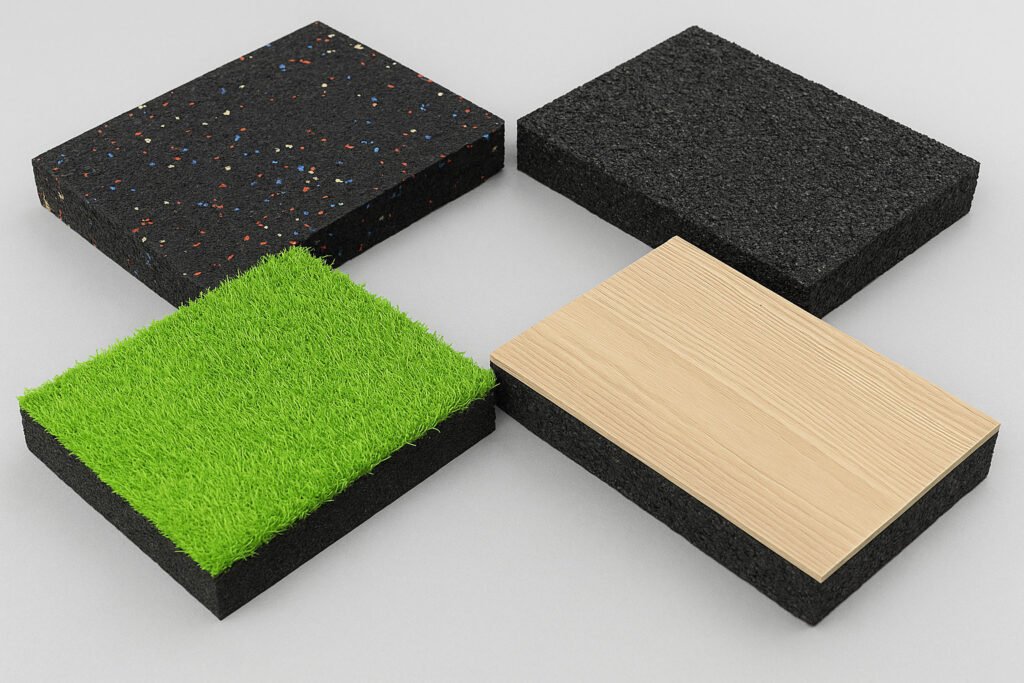
Flooring is the base of every workout space. Choosing the right one balances safety, cost, and design. Let’s explore the top five flooring types and how they compare.
Composite Rubber Roll Tile – Still the Premium Pick?
Floors take a beating in weightlifting zones. Dropped dumbbells, heavy barbells, and dragging racks test any surface.
Composite roll tiles combine a dense SBR rubber tile base with a laminated rubber roll surface. Options vary by EPDM content, giving gyms both looks and strength.
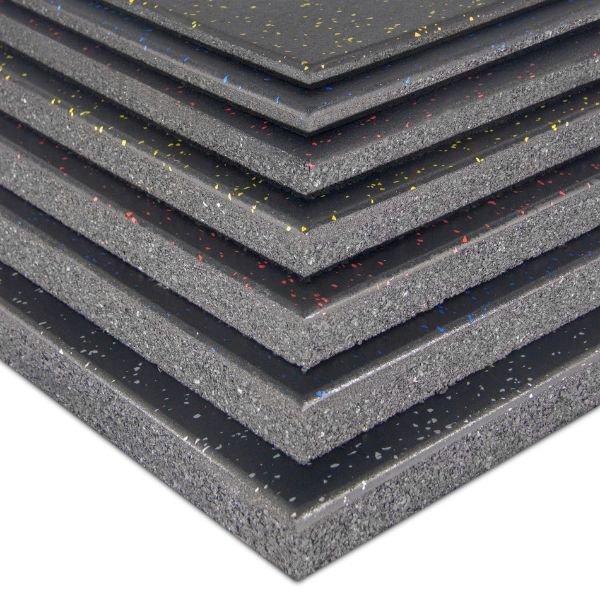
Composite tiles come in four main top-surface options:
- Black SBR roll surface – simple and budget-friendly.
- 15% EPDM speckled roll surface – colorful dots, cost-effective, and the most popular.
- 70% EPDM speckled roll surface – brighter, higher durability.
- 100% EPDM roll surface – vibrant colors, top durability, and the highest price.
Specs:
- Size: 500×500mm / 600×600mm / 1000×1000mm
- Thickness: 15–50mm
- Shock absorption: ★★★★★
- Certifications: CE, EN1177
Pros: high durability, premium look, customizable colors.
Cons: price rises with EPDM content; 100% EPDM is the most expensive.
Applications: heavy weight zones, luxury gyms, and high-traffic strength areas.
For gyms seeking both function and style, composite roll tiles remain a top investment. For more buying details, see Rubber Floor Tiles Buying Guide.
Turf-Rubber Composite Tile – Functional Training Favorite?
Sled pushes, agility ladders, and HIIT sessions demand more than flat rubber. They need grip, resistance, and visual zones.
Turf-rubber composite tiles combine artificial grass fibers on a shock-absorbing rubber base. They create a unique training surface for CrossFit and performance gyms.
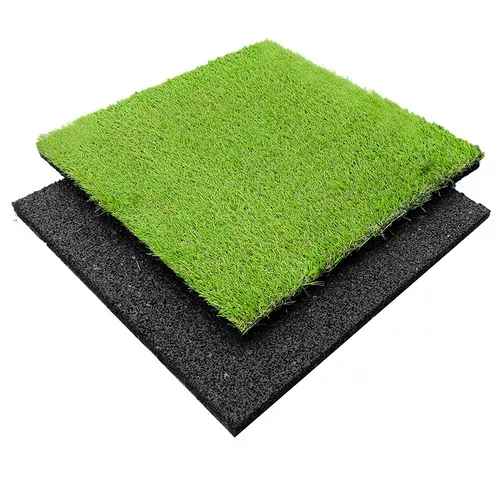
Specs:
- Size: usually 500×500mm / 1000×1000mm
- Thickness: 20–40mm
- Materials: synthetic turf layer + SBR or EPDM rubber base
Pros: multi-use surface, strong resistance for sleds, striking visual design.
Cons: cleaning requires more care, turf fibers wear under very heavy loads.
Applications: CrossFit boxes, sled lanes, functional training areas.
This product type continues to trend in 2025 as gyms move toward performance-focused layouts.
PVC Composite Tile – Clean and Cost-Efficient?
Not every gym needs thick, heavy rubber. Some need a smoother, easier-to-clean floor.
PVC composite tiles feature a PVC top layer fused with an SBR rubber base, balancing flexibility, wear resistance, and hygiene.
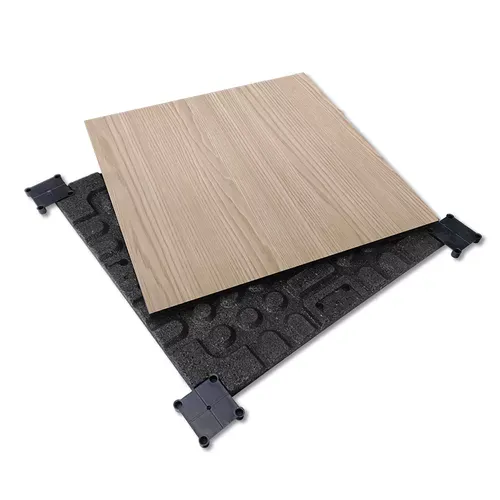
Specs:
- Thickness: 10–20mm
- Sizes: 500×500mm and larger
- Surface: PVC anti-slip layer
Pros: smooth finish, stain-resistant, easy to maintain, moderate cost.
Cons: less shock absorption compared to full rubber tiles.
Applications: yoga rooms, dance studios, locker room walkways, cardio areas.
PVC composites are rising in demand where appearance and cleanliness matter more than impact resistance.
Tiny Granules Rubber Tile – Classic Weight Zone Choice?
When athletes drop barbells, nothing beats dense rubber for impact.
Tiny granule tiles are pressed from fine SBR particles, sometimes mixed with 15% EPDM dots. Their durability makes them the go-to for heavy training zones.
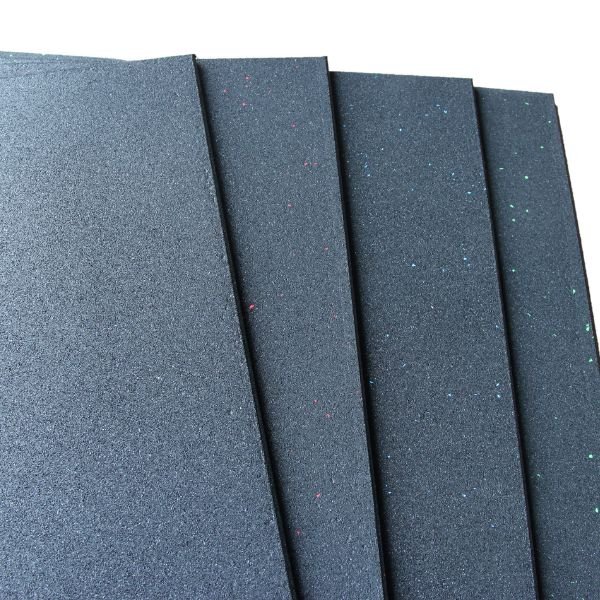
Specs:
- Sizes: 500×500mm / 600×600mm / 1000×1000mm
- Thickness: 15–50mm
- Composition: 100% fine SBR or SBR + EPDM dots
Pros: excellent shock absorption, anti-slip, long lifespan.
Cons: looks plainer compared to composite or full EPDM options.
Applications: weightlifting areas, free weight zones, CrossFit floors.
For gyms that prioritize function and cost-effectiveness, tiny granule tiles remain unbeatable. See more at Gym Rubber Tile.
Rubber Roll – The Seamless Standard?
Some gym areas demand wide coverage, not puzzle-like tiles. Rolls create a smooth look.
Rubber rolls are long sheets (8–15m), available in different EPDM content. They work best in cardio, yoga, and office zones.
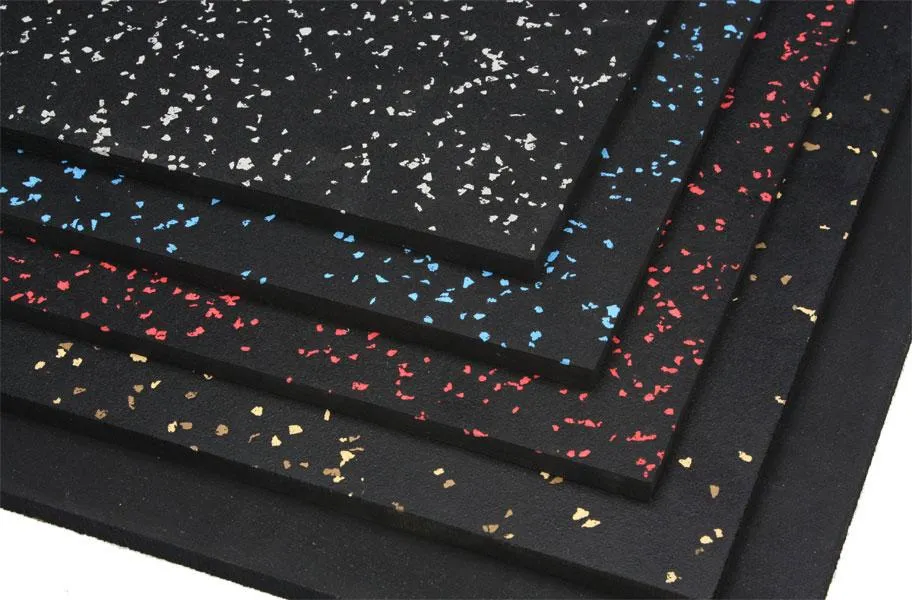
Material Options:
- Black SBR rolls – low-cost, basic performance.
- 15% EPDM speckled rolls – most popular for balance of looks and cost.
- 70% EPDM speckled rolls – stronger color, higher price.
- 100% EPDM rolls – top-end, vibrant colors, premium durability.
Specs:
- Thickness: 3–12mm
- Width: 1.0–1.25m
- Length: 8–15m
Pros: seamless, cost-efficient, easy to install with glue or tape.
Cons: not suited for heavy weight zones.
For a full installation guide, check 2025 Expert’s Guide to Rubber Flooring Rolls for Gyms.
Product Comparison
| Product Type | Thickness Range | Best Zone | Main Advantage | Limitation |
|---|---|---|---|---|
| Composite Roll Tile | 15–50mm | Heavy weight zones | Premium look, durable | High cost |
| Turf Composite Tile | 20–40mm | Functional zones | Multi-use, unique | Harder to clean |
| PVC Composite Tile | 10–20mm | Yoga, walkways | Easy maintenance | Lower shock absorb |
| Tiny Granules Tile | 15–50mm | Free weights | High durability | Plain appearance |
| Rubber Roll | 3–12mm | Cardio, yoga | Seamless, budget-friendly | Not for heavy lifts |
For supplier sourcing insights, see 2025 Distribution of Gym Rubber Flooring Suppliers in China.
Gym Flooring Buying Guide – How to Choose?
- By function: weight zones need tiles (tiny granule, composite), cardio zones need rolls.
- By budget: SBR is cheapest, 15% EPDM speckled is most popular, 100% EPDM is premium.
- By looks: composite or full EPDM provides bright, luxury surfaces.
- By maintenance: PVC and rolls are easier to clean than turf composites.
- By safety: always request CE and EN1177 certificates for compliance.
For a complete knowledge base, visit Gym Rubber Flooring Complete Guide 2025.
Related Blogs
- Rubber Floor Tiles Buying Guide
- 2025 Expert’s Guide to Rubber Flooring Rolls for Gyms
- 2025 Distribution of Gym Rubber Flooring Suppliers in China
- 2025 Outdoor Rubber Floor and EPDM Flooring Selection Guide
- Complete Guide: Gym Rubber Flooring Knowledge 2025
- How to Install Rubber Flooring on Concrete
FAQ – Gym Rubber Flooring 2025
Q1: Which gym flooring type is the most popular in 2025?
A1: The 15% EPDM speckled composite and rubber roll are the most popular due to balanced price and aesthetics.
Q2: Are turf-rubber tiles hard to maintain?
A2: Yes, they require more cleaning effort compared to PVC or rolls, but they offer unique training value.
Q3: Can rubber rolls be used in weightlifting zones?
A3: No, rolls are thinner and better for cardio or yoga zones. For heavy lifting, tiles (15–50mm) are safer.
Q4: How do I verify certifications?
A4: Always ask for EN1177 and CE documents. Reliable suppliers provide original, traceable certificates.
Q5: Where can I find more expert resources?
A5: Check trusted industry sources like IHRSA for global gym standards.
Conclusion
In 2025, gyms choose flooring by zone and budget. No single product fits all—function, looks, and cost guide the right choice.