
Do Rubber Tiles Get Hot in the Sun?
Planning an outdoor playground, fitness area, or functional training zone?
One common concern from architects, gym owners, and school operators is whether rubber tiles become too hot under direct sunlight.
Yes, rubber tiles—especially dark-colored SBR tiles—can heat up significantly in the sun. However, material choice, color, and surface structure can greatly reduce surface temperature and improve safety.
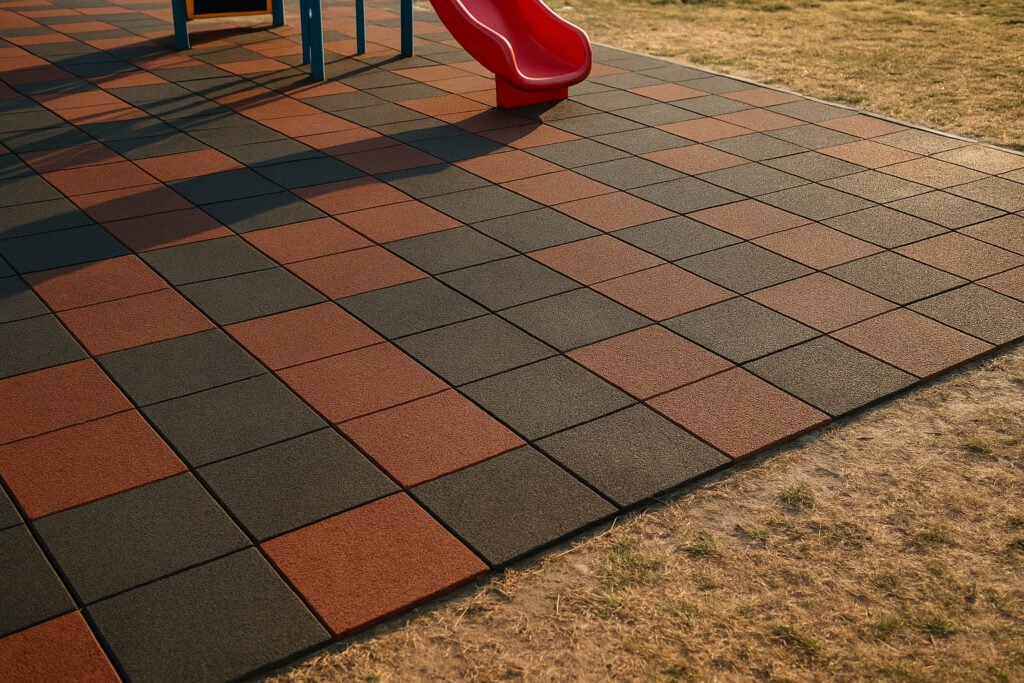
This guide explains why rubber heats up, how hot it can get in real projects, and how to design safer outdoor rubber flooring systems for children, athletes, and pets.
Why Do Rubber Tiles Heat Up Under Sunlight?
Rubber flooring absorbs and stores heat due to its density and composition. In outdoor environments, surface temperature is mainly affected by the following factors:
- Color: Dark colors such as black or charcoal absorb more infrared radiation
- Material type: SBR rubber (commonly used in black tiles) absorbs more heat than EPDM granules
- Surface structure: Dense, flat surfaces retain heat longer
- Exposure level: Open, unshaded areas receive continuous solar radiation
In practice, black SBR tiles used in outdoor fitness zones or playgrounds are the most likely to overheat, especially during summer afternoons.
For outdoor applications, material selection plays a critical role:
https://lanhefloor.com/outdoor-rubber-floor/
How Hot Can Rubber Tiles Get in the Sun?
Under full summer sun, rubber flooring surface temperatures can vary widely depending on material and color.
| Material & Color | Max Surface Temp (°C) | Practical Notes |
|---|---|---|
| Black SBR Tile | 65–75°C | Very hot; not suitable for barefoot use |
| Light Grey SBR | 55–60°C | Slight improvement, still warm |
| Yellow / Red EPDM | 48–55°C | Suitable for playgrounds |
| Blue EPDM | 50–58°C | Acceptable with shading or misting |
These values align with ASTM surface temperature studies for playground surfacing materials.
Reference: https://www.playgroundsafety.org/research/surface-temperature
In real projects, surface temperature is influenced more by color, binder type, and sunlight duration than by rubber alone.
Is It Safe to Walk or Play on Rubber Tiles Barefoot?
Rubber tiles can be safe for barefoot use when designed correctly. The acceptable surface temperature depends on the user group.
| User Type | Max Recommended Temp | Design Recommendations |
|---|---|---|
| Toddlers / Children (Barefoot) | ≤ 45°C | Light-colored EPDM + shading |
| Adults (With Shoes) | ≤ 65°C | Black SBR acceptable |
| Pets | ≤ 52°C | Shaded areas preferred |
This is why most kindergartens, schools, and public playgrounds specify EPDM surfaces rather than black SBR tiles.
For EPDM material options:
https://www.lanhefloor.com/epdm-granules/
How Can You Reduce Heat on Outdoor Rubber Flooring?
You cannot change solar exposure, but you can significantly reduce surface temperature through design choices:
- Use light-colored EPDM (yellow, sky blue, red perform best)
- Add shading structures such as shade sails, canopies, or trees
- Plan airflow with open layouts to allow heat dissipation
- Install flooring in segments to reduce continuous heat retention
- Use water misting systems in extreme heat environments
These methods are widely applied in outdoor gyms, school playgrounds, parks, and fitness trails.
Which Rubber Flooring Performs Best in Sunlight?
| Product Type | Heat Performance | Recommended Use |
|---|---|---|
| Black SBR Tiles | ❌ Very hot | Non-barefoot zones only |
| Laminated Composite Tiles | ✅ Moderate | Outdoor gyms with shoes |
| Light-Colored EPDM Tiles | ✅✅ Cooler | Playgrounds & barefoot areas |
For modular outdoor layouts:
https://lanhefloor.com/puzzle-rubber-tile/
Are Rubber Tiles Suitable for Outdoor Use at All?
Yes. Rubber tiles are widely used outdoors because they provide:
- Excellent shock absorption
- Slip resistance, even when wet
- Compliance with safety standards such as EN1177
- Long service life in public environments
The key is choosing the correct material system for sun exposure and user behavior.
Frequently Asked Questions About Rubber Tiles and Sun Heat
Do rubber tiles get too hot for playground use?
Yes, dark-colored SBR rubber tiles can become very hot in direct sunlight. For playgrounds and barefoot areas, light-colored EPDM tiles combined with shading are strongly recommended.
Are EPDM rubber tiles cooler than SBR tiles?
Yes. EPDM granules reflect heat better than SBR rubber, especially in lighter colors. EPDM surfaces typically stay 10–20°C cooler under the same conditions.
Can rubber flooring be used outdoors in hot climates?
Yes. Rubber flooring is widely used in hot regions when the correct material, color, and installation design are applied. EPDM systems with shading perform well even in high-temperature environments.
Is black rubber flooring safe outdoors?
Black SBR rubber flooring is safe for outdoor use in non-barefoot areas such as outdoor gyms where users wear shoes. It is not recommended for playgrounds or pet zones without shading.
How do I reduce heat on outdoor rubber flooring?
You can reduce surface heat by choosing light-colored EPDM materials, adding shade structures, improving airflow, and installing flooring in segmented layouts.
Related Guides and Deep Dives
Rubber Floor Tiles Buying Guide
https://lanhefloor.com/rubber-flooring-knowledge/rubber-floor-tiles-buying-guide/2025 Outdoor Rubber Floor and EPDM Flooring Selection Guide
https://lanhefloor.com/rubber-flooring-comparison/2025-outdoor-rubber-floor-and-epdm-flooring-selection-guide/What Are the Benefits of Wet Pour Rubber?
https://lanhefloor.com/rubber-flooring-knowledge/what-are-the-benefits-of-wet-pour-rubber/How Thick Should EPDM Wet Pour Flooring Be for Playgrounds?
https://lanhefloor.com/installation-guide/how-thick-should-epdm-wet-pour-flooring-be-for-playgrounds/
Need help choosing rubber flooring for a sunny outdoor project?
https://www.lanhefloor.com/contact
Explore all solutions at:
https://www.lanhefloor.com