
How to Maintain Rubber Flooring in Gyms – Rolls and Tiles
Heavy training, dropped weights, sweat, and constant foot traffic—gym flooring takes a beating every day.
With regular cleaning, routine inspection, and timely repairs, rubber tiles and rubber rolls can last for years while keeping your gym clean, safe, and professional.
This guide is part of Lanhefloor’s complete gym rubber flooring knowledge system.
If you are planning, operating, or maintaining a gym, these related guides may also help:
Rubber Floor Tiles Buying Guide
https://lanhefloor.com/rubber-flooring-knowledge/rubber-floor-tiles-buying-guide/2025 Expert’s Guide to Rubber Flooring Rolls for Gyms
https://lanhefloor.com/rubber-flooring-knowledge/rubber-flooring-rolls-gym-guide-2025/2025 Distribution of Gym Rubber Flooring Suppliers in China
https://lanhefloor.com/rubber-flooring-buying-guide/2025-distribution-of-gym-rubber-flooring-suppliers-in-china/
Why Does Gym Rubber Flooring Need Regular Care?
Gym flooring faces conditions far harsher than typical commercial floors:
- Sweat and body oils that may cause odor buildup
- Chalk, dust, and shoe grit that grind into the surface
- Dropped weights, dragged machines, and repeated high impact
Without proper maintenance:
- Rubber rolls may curl or lift at the edges
- Tiles may shift, compress, or wear unevenly
- The surface may become slippery or unhygienic
For impact-heavy zones, choosing the right structure and thickness is critical from the start:
https://lanhefloor.com/gym-rubber-tile/
You may also want to review:
https://lanhefloor.com/rubber-flooring-knowledge/rubber-flooring-knowledge-complete-guide-gym-rubber-flooring-2025
Daily Cleaning Routine (The Foundation of Floor Longevity)
Daily cleaning prevents most long-term flooring problems.
- Sweep or vacuum to remove chalk, dust, and grit
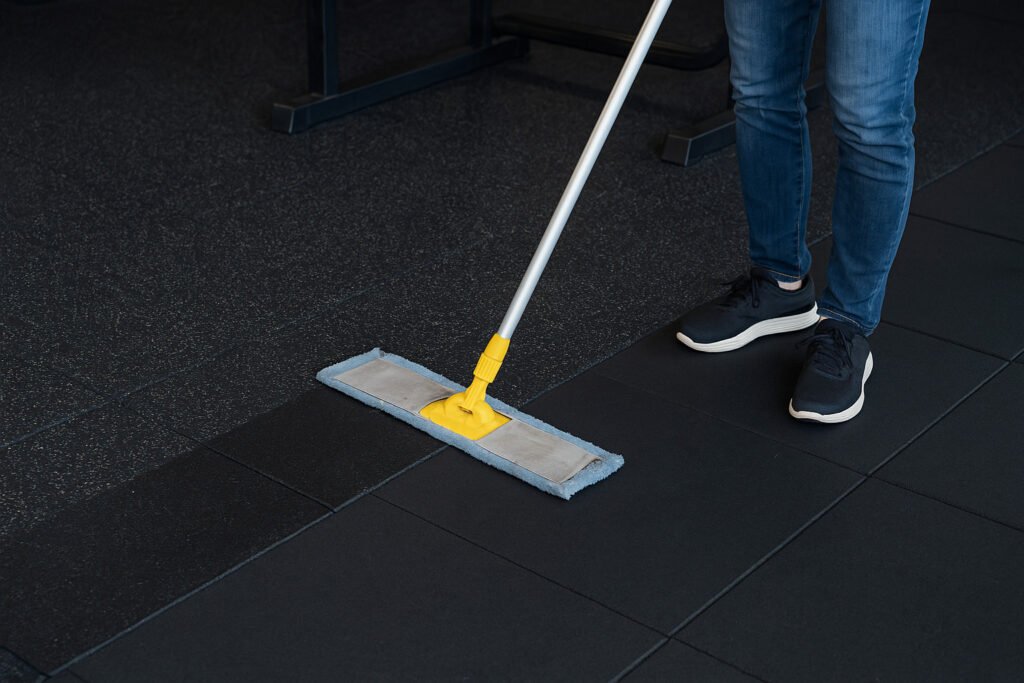
- Mop using warm water and a neutral pH cleaner
- Pay extra attention to entrances and free-weight zones
- Allow the floor to fully dry before heavy use
Avoid bleach, alcohol, acidic, or oil-based cleaners.
These can harden rubber, fade color, or leave slippery residue.
For large seamless areas with easier daily cleaning, rubber rolls are often preferred:
https://lanhefloor.com/gym-rubber-roll/
Weekly and Monthly Inspections (Preventive Maintenance)
Depending on foot traffic and training intensity, inspections should be done weekly or monthly.
Check for:
- Curling edges on rubber rolls
- Loose or shifted tiles
- Cracked seams or compressed drop zones
- Persistent odors in weight or locker areas
Catching issues early allows local repair instead of full replacement, which significantly lowers maintenance costs.
For gyms requiring higher stain resistance and surface stability:
https://lanhefloor.com/laminated-gym-rubber-tile/
How to Maintain Rubber Rolls in Gyms
Rubber rolls are widely used in cardio, stretching, and functional training areas.
| Common Issue | Recommended Solution |
|---|---|
| Curling edges | Re-glue edges or install aluminum edge strips |
| Slippery areas | Deep clean and allow full drying |
| Local wear | Replace affected roll section only |
Correct installation plays a key role in long-term performance.
Installation reference:
https://lanhefloor.com/installation-guide/how-to-install-gym-rubber-roll-flooring-correctly/
https://lanhefloor.com/installation-guide/gym-rubber-roll-installation-problems-solutions/
How to Maintain Rubber Tiles in Gyms
Rubber tiles are ideal for free-weight and drop zones because they allow modular repair.
| Common Issue | Recommended Solution |
|---|---|
| Loose tile | Lift, clean the base, and re-adhere |
| Damaged tile | Replace the single tile only |
| Odor buildup | Neutral cleaner + improved ventilation |
Interlocking systems further simplify maintenance and replacement:
https://lanhefloor.com/puzzle-rubber-tile/
Maintenance Tips for Different Gym Zones
Free Weight & Olympic Lifting Areas
Tiles 30–50mm thick are recommended. Clean chalk and sweat daily.
https://lanhefloor.com/tiny-granule-rubber-tile/
Yoga, Cardio & Functional Training Areas
Rubber rolls provide a seamless feel and are easier to clean.
https://lanhefloor.com/gym-rubber-roll/
Corridors & Transition Areas
Daily cleaning and seam inspection are essential.
https://lanhefloor.com/outdoor-rubber-floor/
How to Extend the Lifespan of Gym Rubber Flooring
- Install entrance mats to reduce grit
- Add extra rubber layers in heavy drop zones
- Rotate tiles in extreme wear areas
- Schedule quarterly deep cleaning and inspection
Real project references:
https://lanhefloor.com/projects/
Frequently Asked Questions About Gym Rubber Flooring Maintenance
How often should gym rubber flooring be cleaned?
High-traffic gyms should clean floors daily, especially weight and cardio zones. Lower-traffic areas can be cleaned several times per week.
Can rubber gym flooring be washed with strong disinfectants?
No. Bleach, alcohol, and acidic cleaners may damage rubber surfaces. Neutral pH cleaners are recommended.
Why do rubber rolls curl at the edges?
Edge curling is usually caused by improper installation, temperature changes, or insufficient adhesive. Early re-gluing prevents further damage.
Is it easy to replace damaged rubber tiles?
Yes. One advantage of rubber tiles is modular replacement. Individual damaged tiles can be replaced without disturbing surrounding areas.
How long does gym rubber flooring typically last?
With proper installation and maintenance, quality gym rubber flooring can last 8–15 years, depending on usage intensity.
Summary
Gym rubber flooring is built for impact, but durability depends on care.
With proper cleaning, inspection, and timely repair, rubber rolls and tiles remain hygienic, safe, and cost-effective over the long term.
For product samples or gym flooring solutions, contact us at:
https://www.lanhefloor.com/contact
Explore all gym flooring options:
https://www.lanhefloor.com
In most commercial gyms, rubber flooring should be cleaned daily in high-traffic areas such as free weight zones and cardio areas. Lower-traffic areas can be cleaned several times per week. Regular dust and chalk removal helps extend floor lifespan.
Bleach, alcohol, and other harsh chemicals are not recommended for routine cleaning. They may damage rubber surfaces and leave slippery residue. A neutral pH cleaner is generally safer for daily maintenance.
Edge curling is usually caused by improper installation, insufficient adhesive at the edges, temperature changes, or repeated pulling forces from equipment. Early re-gluing or edge restraint can prevent further damage.
Rubber tiles are often easier to maintain in free weight and drop zones because individual damaged tiles can be replaced without disturbing surrounding areas. Rubber rolls work well for large seamless spaces but require stronger seam and edge control.
With correct installation and proper maintenance, quality rubber gym flooring can last approximately 8–15 years. Actual lifespan depends on usage intensity, weight impact, cleaning routines, and repair speed.
A neutral pH cleaner designed for rubber or sports flooring is recommended. Avoid acidic, oil-based, or highly alkaline products to prevent surface damage and residue buildup.